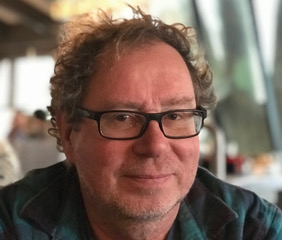
I started out my science career as a practical evolutionary biologist working with frogs on islands in the mediterranean sea. There was no good analysis software for my data available at that time. Therefore, in 1994, I started a career as a computational biologist developing software (MIGRATE: https://popgen.sc.fsu.edu) for other biologists to analyze large-scale DNA datasets and compare different evolutionary hypotheses. My interests have centered on the coalescent and how we can use that to infer parameters of population genetic models and also compare them statistically.
My research encompasses theoretical, computational and applied aspects of data assimilation — the science of optimally combining numerical models and observations of physical systems. In the past, I have utilized data assimilation algorithms to improve the representation of atmospheric convection through the incorporation of ground-based remote sensors. More recently, my focus has shifted to the development of new data assimilation methods which capitalize on the ongoing AI revolution. Beyond data assimilation, my interests also extend to numerical weather prediction, atmospheric dynamics, and various topics within the data sciences.
Before joining the Department of Scientific Computing at FSU as an Assistant Professor in August 2022, I was previously a Pacific Institute for the Mathematical Sciences Postdoctoral Fellow working with Professors Ben Adcock, Maxwell Libbrecht, and Leonid Chindelevitch at Simon Fraser University. I studied Mathematics at the University of Tennessee under Professor Clayton Webster, and worked in the Computational and Applied Mathematics Group at Oak Ridge National Laboratory. Click here to learn more about my research.
I have been engaged in the development of artificial intelligence since 2014, beginning with the advent of word2vec. Over the years, my research has evolved alongside the field, encompassing work on autoencoders, pruning techniques, graph neural networks, and topic modeling, eventually leading to modern transformer-based architectures. More recently, my focus has shifted toward the application of large language models (LLMs) in education, where I am developing tools to enhance classroom engagement and learning outcomes using frontier AI capabilities. I am also exploring the integration of agentic systems to streamline operations within the Department of Scientific Computing, with the dual goals of reducing administrative workload and improving visibility to prospective students.
My research focuses on developing scalable computational methods for the numerical solution of partial differential equations (PDEs) on modern high-performance computing (HPC) systems. I develop algorithms that integrate advanced numerical methods with parallel computing to address challenging problems in computational science and engineering. My work spans a range of applications, including the Einstein field equations for gravitational-wave propagation, electron Boltzmann transport, low-temperature plasma flows, and transport problems involving moving interfaces.
My research interests lie at the intersection of numerical analysis, parallel algorithms, high-performance computing, scientific machine learning, and PDE-constrained inverse problems. A central goal of my work is to develop state-of-the-art, scalable algorithms that enable efficient and accurate simulation, inference, and data-driven modeling of complex physical systems on next-generation supercomputers.
I am interested in computational material science. Two main research topics in my group are: (1) developing new multiphysics methods to achieve high accuracy in materials simulations (such as predicting novel electronic structures at oxide interfaces) and (2) developing new orbital-free density functional theory to enable large-scale, accurate simulations of functional materials (such as metal alloys and lithium battery materials).
PULSE: Scientific Machine Learning Lab is a research lab in the Department of Scientific Computing at Florida State University, founded in 2022 and led by Principal Investigator Olmo Zavala-Romero.
Applied machine learning in medical imaging: prostate and breast cancer detection, personal diagnosis from clinical and image (MRI) data, improve generalization of models.
Applied machine learning in earth sciences: data assimilation in ocean models, nowcasting (precipitation and hail), short-term forecast of air pollution, loop current and eddy detection and analysis.
Climate change: predicting future distribution of invasive insect pests considering climate change projections.
Scientific Machine Learning: Physics Informed Neural Networks (PINNs) to improve parameterizations in Ocean Models, etc.
Kevin has been an active associate for his entire time at FSU. Kevin is a sea-going oceanographer whose research ranges from the global ocean circulation to the dynamics of hydrothermal plumes.