"Statistical frequency analyses and machine learning for predicting floods and surface water quality"
Wednesday, Feb 11, 2026
- Colloquium - 499 DSL Seminar Room
- 03:30 to 04:30 PM Eastern Time (US and Canada)
Abstract:
Floods and surface water pollution are pressing environmental problems affecting our economy, society and ecosystem. Mitigating the risks posed by these events requires understanding their driving mechanisms and predicting them via models. Statistical approaches, traditional methods or machine learning (ML) algorithms, are valuable and can assist with these tasks through analyzing data from ground measurements, reanalysis, satellite observations and process-based modeling. There has been a growing increase in the application for various environmental and water resources problems. In this presentation, I will discuss strengths and limitations of statistical approaches for different environmental and water resources problems, including predicting flood events, stream water quality and flood impacts on human health. Example modeling/analysis problems are provided for various locations and events, including flooding during Hurricanes Ida and Ian, stream water quality (nutrients, dissolved oxygen and bacteria) in the Florida Gulf, microplastic in marine environments and dam failure assessments across the United States.
Speaker Biography:
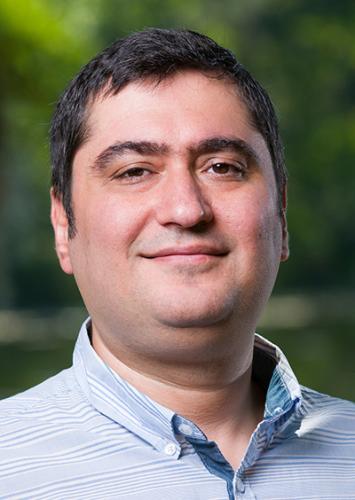
Ebrahim Ahmadisharaf is currently an Assistant Professor in the Center for Resilient Infrastructure and Disaster Response Center (RIDER) and Department of Civil and Environmental Engineering at Florida State University. His work primarily focuses on predicting floods and surface water quality under a changing climate and land cover to support decisions related to civil infrastructure design, flood mitigation and water pollution control. His research has been published in several peer-reviewed journals. Dr. Ahmadisharaf has delivered multiple presentations at State, national and international conferences. Since 2016, he has been a reviewer for various funding agencies (e.g., NSF, NASA, NASEM, DOE, DoD, FFAR and USGS), peer-reviewed journals and an elected member of AGU Water Quality Technical Committee, AMS Committee on Hydrology and ASCE-EWRI TMDL Analysis and Modeling Task Committee, and Surface Water Hydrology and Watershed Management Technical Committees. He has been also an Associate Editor of Journal of Hydrologic Engineering since 2023. Dr. Ahmadisharaf has supervised more than 30 students and postdocs. His research has led to about $6 million in grants supported by federal (NSF, NASEM, EPA, USDA and NASA) and state (Florida Department of Environmental Protection) agencies as well as private foundations. In 2024, he was selected as the NASEM’s Early Career Research Fellow and later in 2025, he was elected as a Fellow of EWRI and Senior Member of IEEE. He was selected as an Engineering Rising Star by ASEMFL for his contributions to understanding of compound environmental hazards and their impact on water pollution and human health.
| File | Description | File size |
|---|---|---|
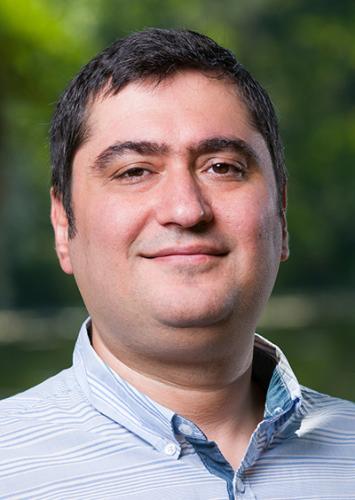 Ebrahim Ahmadisharaf.jpg Ebrahim Ahmadisharaf.jpg | Headshot | 25 kB |