"Advancing Density Functional Theory for Periodic and Solvated Systems"
Mani Tyagi
Department of Scientific Computing
Florida State University (FSU)
Wednesday, Sep 16, 2026
- Colloquium - 499 DSL Seminar Room
- 03:30 to 04:30 PM Eastern Time (US and Canada)
Abstract:
Accurate prediction of electronic properties usually requires high-level electronic structure methods, whose computational cost often scales steeply with system size. I discuss two recently developed methods for achieving sufficiently accurate density functional theory (DFT) calculations of large periodic and solvated systems.
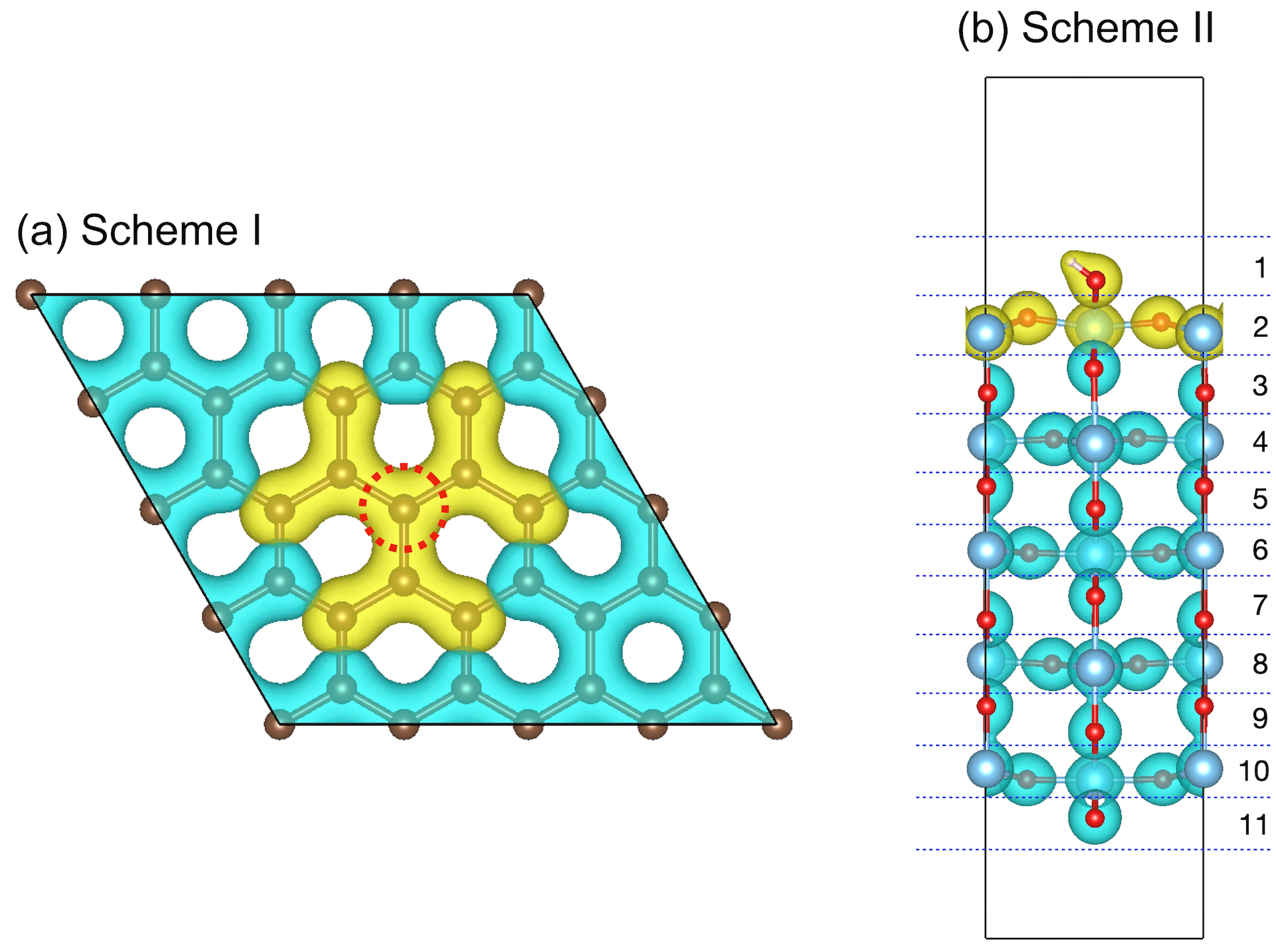
In the first part, I discuss the extension of the embedded cluster density approximation (ECDA) to periodic systems. ECDA is a local correlation method formulated within the framework of DFT. It partitions the system's electron density into embedded clusters and evaluates high-level exchange–correlation contributions locally. These atom-centered corrections are summed to construct the system's total exchange–correlation energy. ECDA is a nearly black-box method applicable to systems with various bond types. Applications to hydrogen chains, conjugated polymers, graphene vacancies, and adsorption of CO and OH on TiO₂(110) demonstrate the strengths and limitations of this local embedding method.
In the second part, I introduce the spatial mixing of model potentials (SMMP) method, which constructs high-quality exchange–correlation potentials by spatially mixing the exchange potentials of exact exchange and the local density approximation. A key feature of SMMP is that the spatial mixing function is fully determined from the piecewise-linearity conditions of both the total energy and electron density. I then discuss the extension of SMMP to molecules in polarizable environments. We show that dielectric screening from the solvent enters the exchange–correlation potential seamlessly, leading to the correct asymptotic behavior of the exchange–correlation potential.
| File | Description | File size |
|---|---|---|
 Mani_Tyagi_research_emb_demo.png | Research | 1460 kB |