"How did Computing Change Scientific Discovery?"
Wednesday, Aug 26, 2026
- Colloquium - 499 DSL Seminar Room
- 03:30 to 04:30 PM Eastern Time (US and Canada)

Click Here to Join via Zoom
Meeting # 942 7359 5552
Zoom Meeting # 942 7359 5552
Abstract:
When astronomers at the Harvard College Observatory sought to understand observed regularities in Cepheid variable stars early in the twentieth century—crucial for creating a cosmological yardstick and resolving the question of whether “island universes” (now galaxies) existed beyond the Milky Way—they turned to computers. “Computer” then referred not to devices but to people who solved equations: in Harvard’s case, a group of women, many trained at nearby Radcliffe, skilled in mathematics and physics. Not until after World War II was the term “computer” applied to machinery, including the first electronic computer developed at the Institute for Advanced Study in Princeton by John von Neumann. This talk explores several key episodes in the history of scientific computing in America and its applications to a range of scientific fields, highlighting intersections between industrial, governmental, and military patronage; the rapid expansion of the physical sciences in the early Cold War; and societal, political, and cultural factors which shaped how this technological system was forged.
| File | Description | File size |
|---|---|---|
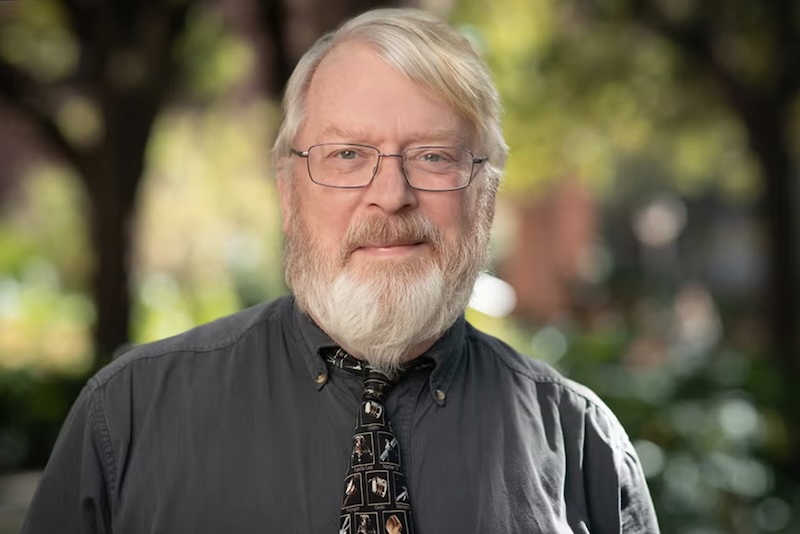 Ronald E. Doel.jpg Ronald E. Doel.jpg | Ronald E. Doel | 90 kB |